Authority-grade vessel registry infrastructure

Vessel registry infrastructure for governments and maritime authorities.

Registry Core™ is a registry platform designed for public-sector requirements: canonical vessel identity, ownership and operator records, controlled lifecycle workflows, issuance of official documentation, and complete audit trails. It supports any vessel class — from small craft to commercial fleets — under a single, governed system of record.

Typical use: national and regional vessel registers, flag administrations, port authority registers, and delegated or hybrid registry models.
Request technical brief View product evidence
Built for oversight
Governance-first design: controlled change, role-based administration, and evidence-grade outputs.
System of recordCanonical vessel state
Controlled workflowsApproval and review gates
Official outputsDocuments and extracts
Audit trailsComplete event history
Configured to match jurisdictional policy, roles, and retention requirements.

Product evidence

Authorities do not buy promises. Below are typical operational views: registry administration, vessel record governance, audit trail, and official outputs.
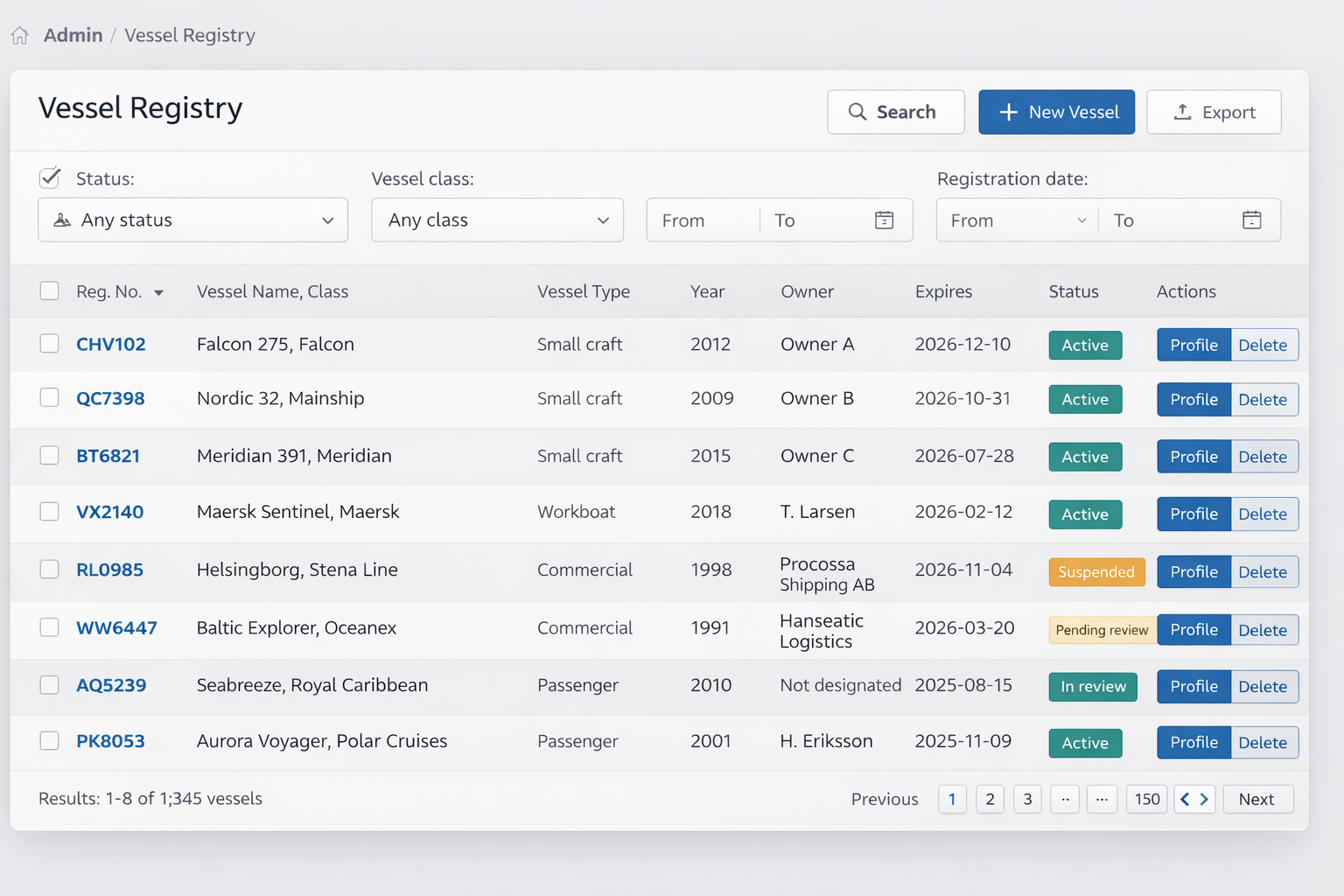
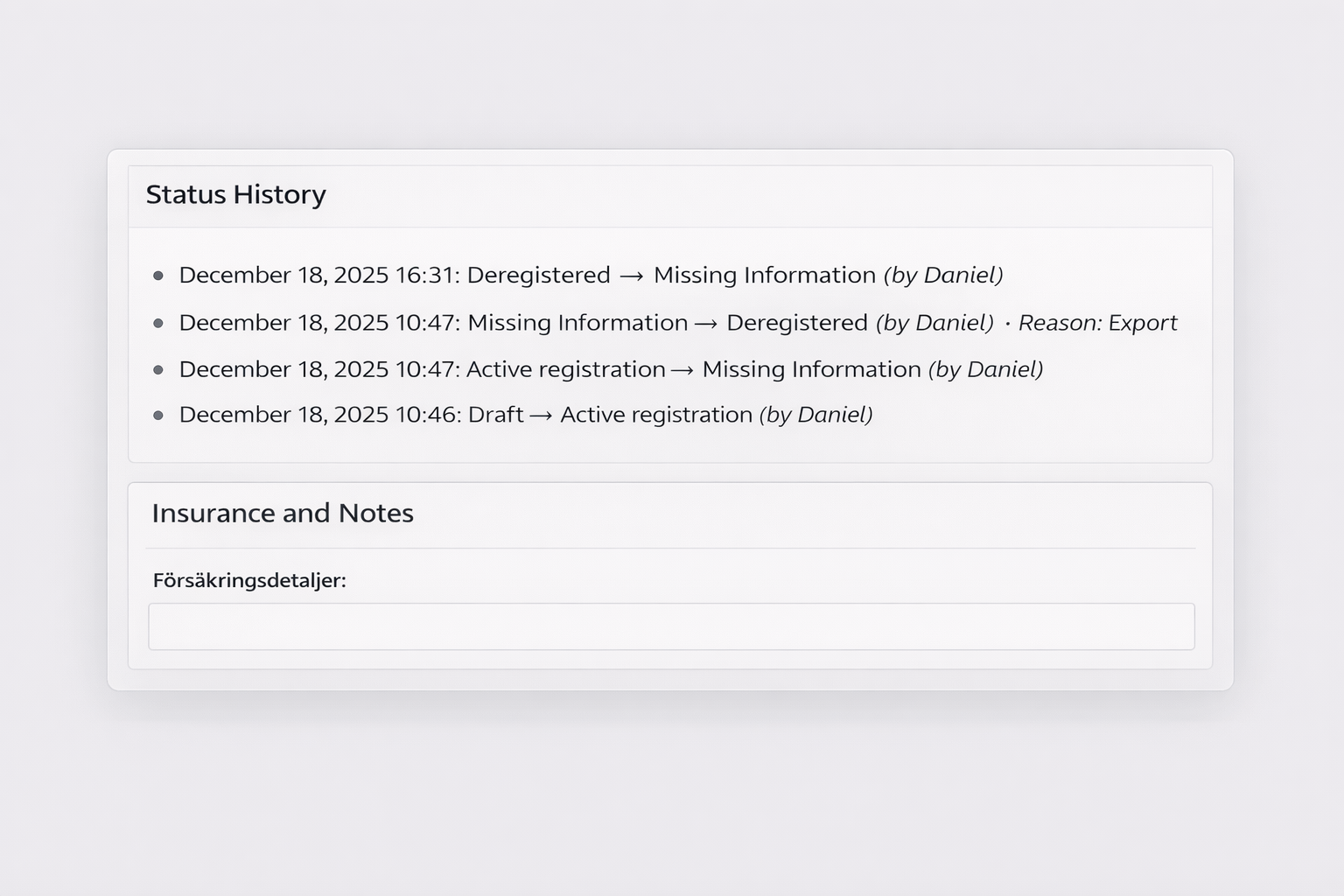
Registry Administration — vessel list, filtering, statuses, and controlled actions
Registry Administration — vessel list, filtering, statuses, and controlled actions.
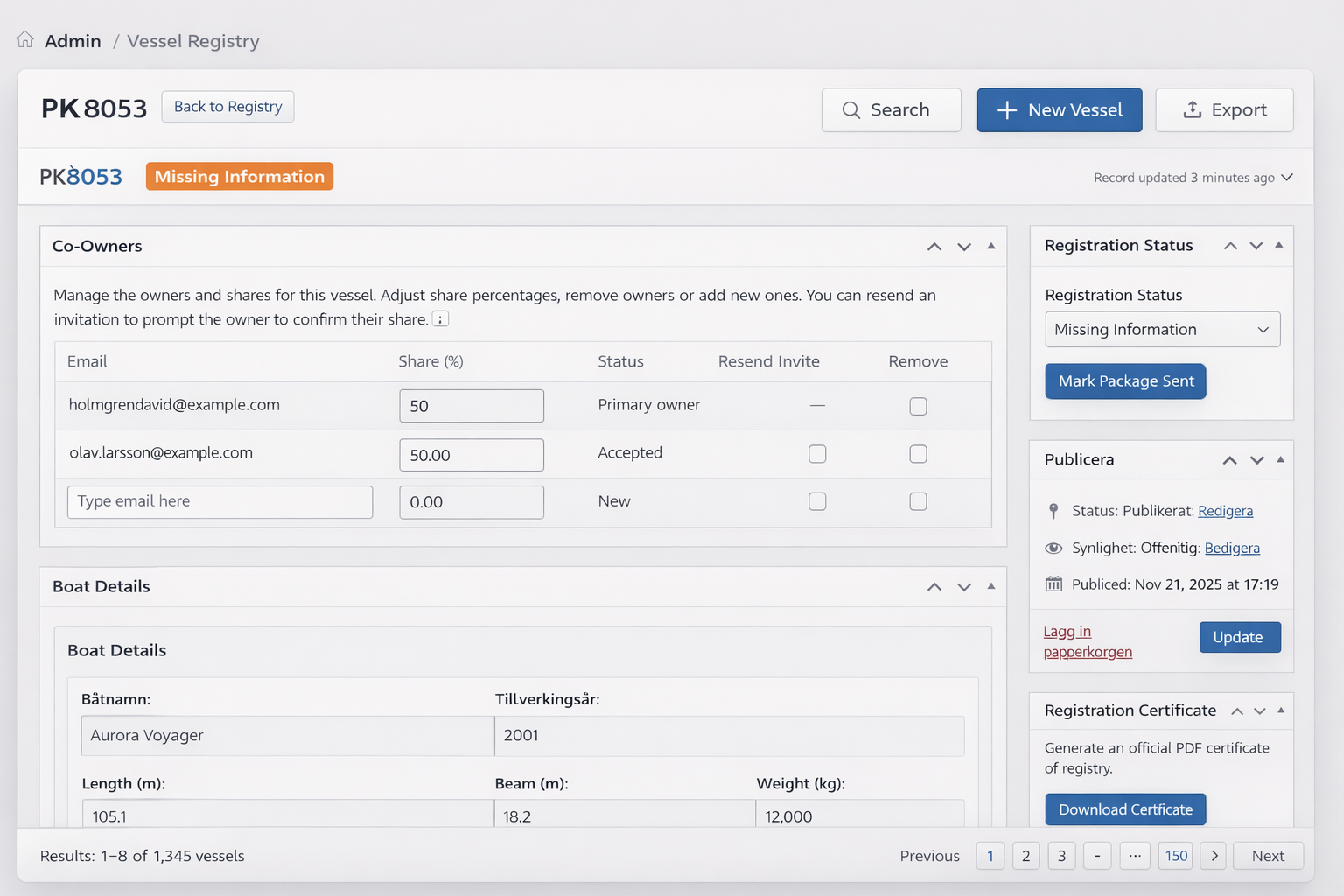
Vessel Record View — identity, owners/operators, changes over time, and provenance
Vessel Record View — identity, owners/operators, changes over time, and provenance.
Audit & Oversight — immutable event history for scrutiny and internal control
Audit & Oversight — immutable event history for scrutiny and internal control.
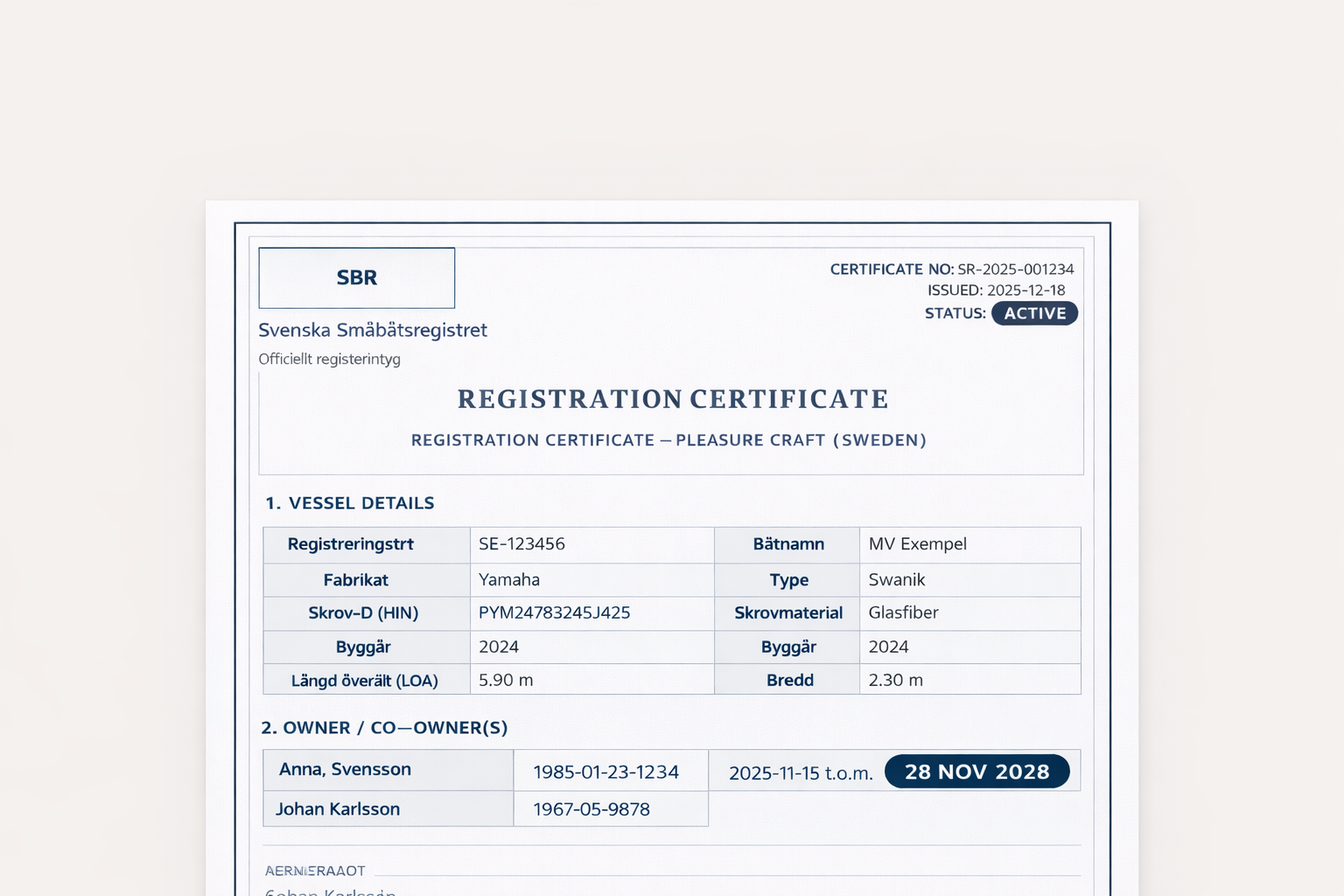
Official Outputs — certificates, extracts, validity periods, and reference numbers
Official Outputs — certificates, extracts, validity periods, and reference numbers.

Policy-controlled workflows

Registry Core™ enforces governed record change. Workflows are configured to match policy: intake, review, approvals, issuance, renewal, modification, suspension, and closure.

Example lifecycle (configurable)
Intake Application / data entry Review Validation & evidence Approval Decision & provenance Issuance Certificate / extract Lifecycle Renew / modify / suspend
Optional steps can be enabled per policy: risk flags, secondary approvals, external verification, and periodic audits.

Core capabilities

The building blocks authorities require for a vessel register: identity, parties, controlled lifecycles, official documentation, fee/renewal workflows, and complete traceability.

Canonical vessel identity

System of record

Vessel-centric records with identifiers and classifications, designed as a single source of truth across systems.

Ownership & operator records

Parties

Primary owners, co-owners, operators, responsible parties — with full historical change tracking.

Controlled lifecycle workflows

Governance

Configurable states: registration, modification, suspension, renewal, reinstatement, and closure.

Official outputs

Documents

Certificates, registry extracts, validity information, and reference numbers for verification.

Renewal & fee workflows

Operations

Renewal cycles, fee logic, receipts, evidence generation — aligned to local policy.

Complete event history

Audit

Immutable audit trails for actions, decisions, document issuance, and status changes.

Governance, accountability, and oversight

Designed for controlled administration: segregation of duties, permissions, and traceability. The goal is defensible governance — not just digitization.

Controls

Role-based administration

Granular permissions
Separate intake, review, approval, and issuance.
Segregation of duties
Reduce risk with structured approvals and controlled changes.
Decision provenance
Record rationale and supporting evidence where required.
Integrity

System of record

Single source of truth
Canonical state and consistent rules for record updates.
Immutable audit trails
Time-stamped, attributable event history for scrutiny.
Exportable evidence
Documents and reports suitable for external requests.

Deployment approach

Implementations can be phased to reduce risk: define scope and policy, configure workflows and outputs, migrate legacy data, and expand capability over time.

Phase 1

Scope & policy mapping

Vessel classes, required fields, roles, documents, and retention requirements.

Phase 2

Configuration & pilot

Configured workflows, permissions, outputs. Controlled pilot with staff.

Phase 3

Operational rollout

Migration, training, operational support, iterative expansion.
Request the technical brief

Capabilities overview, deployment approach, and licensing options for authority use cases.

Replace the contact details with your real addresses.
Email Schedule